Women, who are of Estonian nationality, who are currently studying or have studied at the universities of the Republic of Estonia can become members of korp! Filiae Patriae.

Female students of non-Estonian nationality can become foreign members of korp! Filiae Patriae, when they speak Estonian and are students of Estonian universities. Members of korp! Filiae Patriae friend organisations can also become foreign members if they are studying in Estonian universities.
Women who live abroad but are studying or have studied at a university and who can understand Estonian can become members of foreign chapters, such as in New York, California, Australia, etc. In total there are around 1000 members of korp! Filiae Patriae worldwide.
About us
Korp! Filiae Patriae is an academic student organisation registered at the University of Tartu, which was founded on October 27, 1920 as the first Estonian sorority.
From the foundation of korp! Filiae Patriae, the sorority's purpose has been to unite active and independent educated Estonian women and value patriotism, education, friendship, self-reliance and femininity.
On February 17th, 1989, the flag of korp! Filiae Patriae was blessed in St. Paul’s Church. The same day is considered to be the official restoration of the sorority’s activities in Estonia.
The sorority’s house on W. Struve Street was gifted to the sorority by vil! Aleksandra Piibe who was a member of the California chapter. During the following years renovations were carried out and the building quickly became a true second home and meeting place for our members in the heart of Tartu.
Between 1920 and 1940 C!FP was active in Estonia. An average of 30 new young members were recruited each year, and by 1940 there were 380 members. In 1940 the Soviet authorities banned all student organisations, including korp! Filiae Patriae.
During the Soviet occupation in 1940 until 1989 korp! Filiae Patriae was officially inactive in Estonia. In the turmoil of the second world war, many members fled to the West. The members who remained in Estonia had to adapt to the conditions of the occupation. Still, close contact between members was maintained and as the conditions eased, they began to meet weekly in different cafés and members’ homes. The group called itself TONAKO. Outside of Estonia members formed foreign chapters all over the world in order to maintain unity and continuity.
Values
The principles of korp! Filiae Patriae were formed during the foundation of the sorority. The principles include the creation of a community of friends based on the principle of sisterhood, the development of its members, the promotion of healthy lifestyles and academic research, nationalism, appreciation of the Estonian language and culture.
Symbols
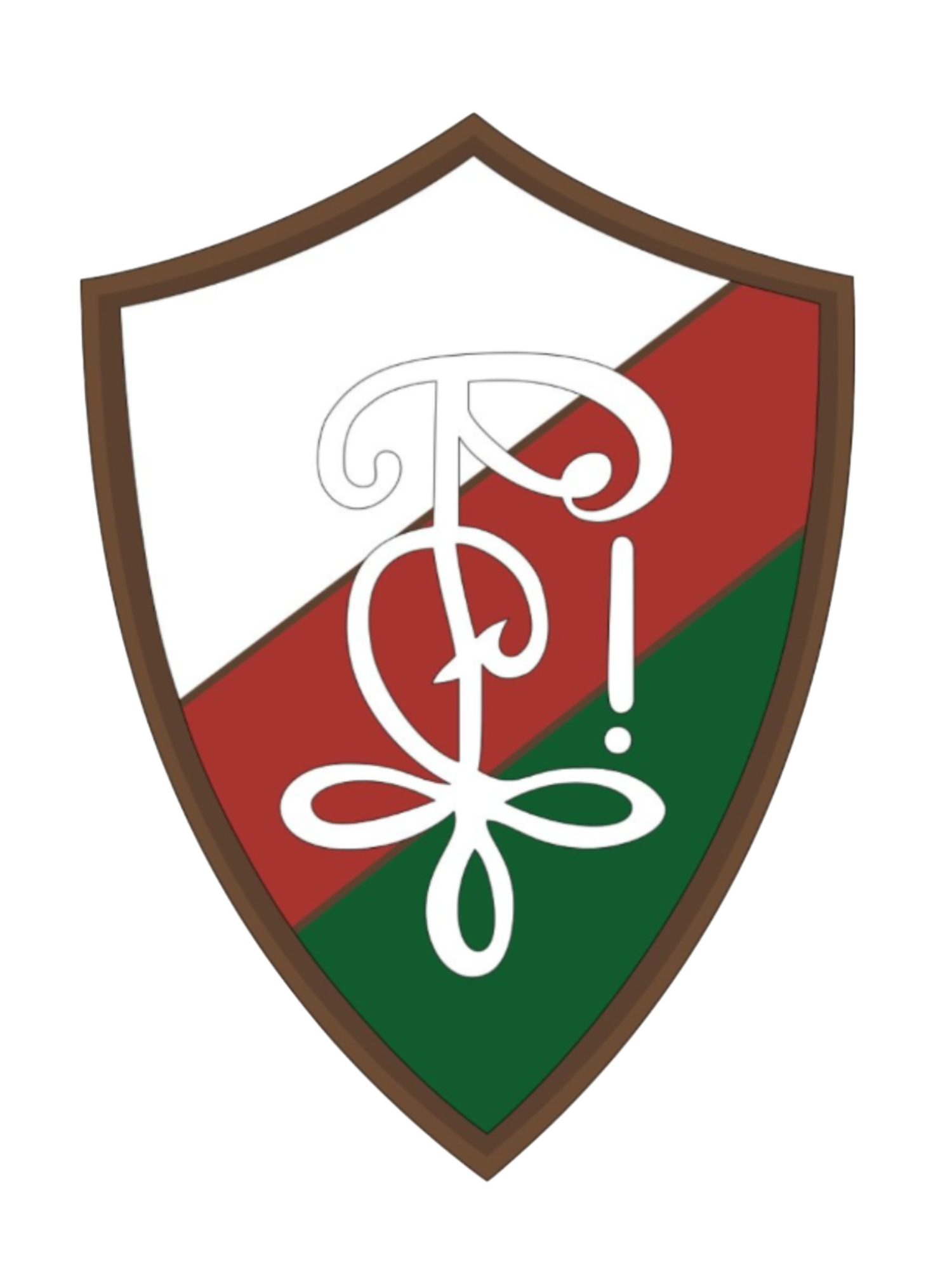
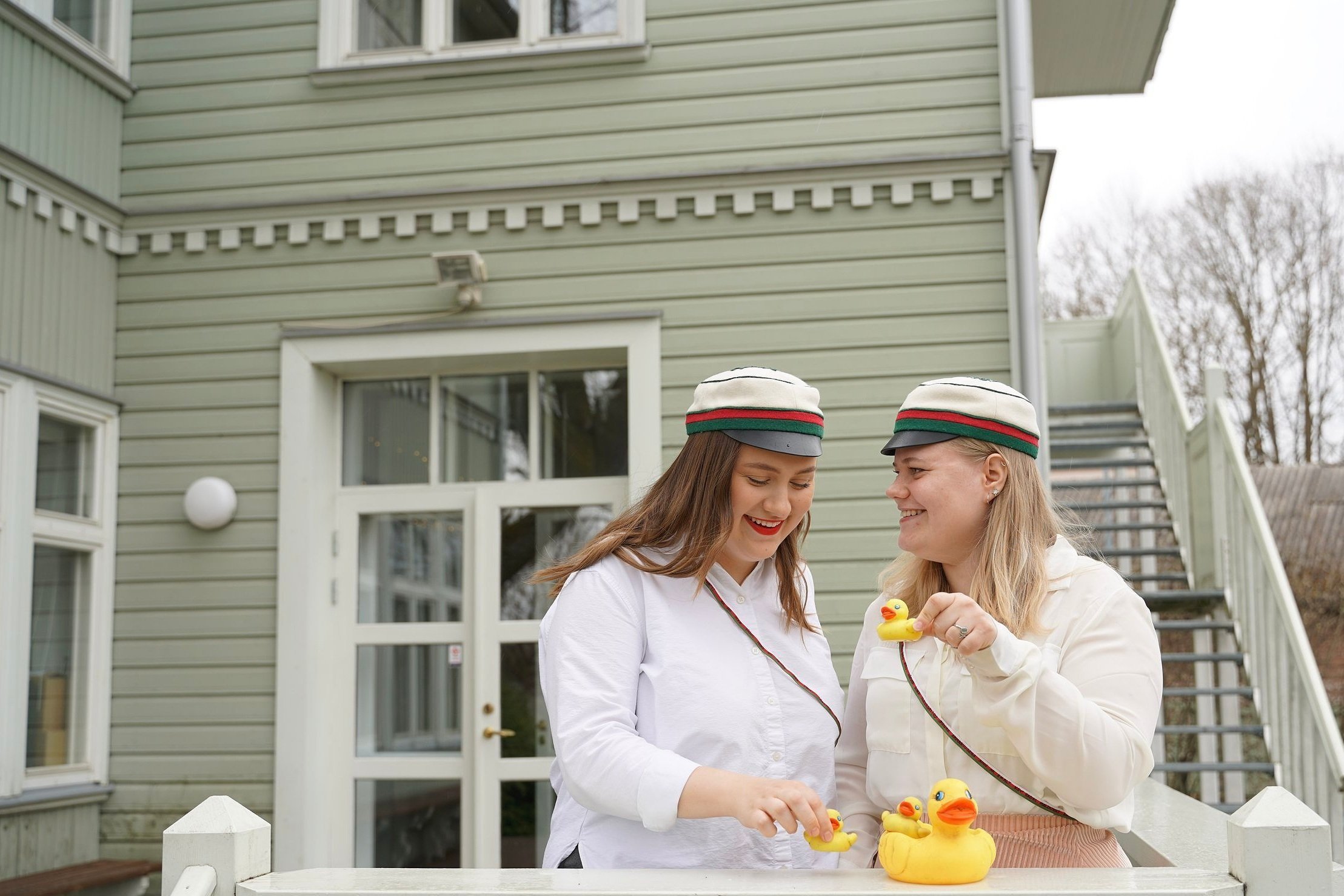
The insignia for active members and alumni are the white-red-green cap and the colour ribbon. The stylised snowflake in the centre of the colored cap represents a lucky charm from Estonian mythology. The colours symbolise:
White - Nordic snowfields, the spiritual purity of the daughter of the fatherland, and the pursuit of education.
Red - the dawn sky, love of the fatherland, sisterhood and the fire of youth.
Green - the forests and meadows of the homeland, courageous hope and the pursuit to be better.
The young members or foxes, wear a black cap with a silver symbol on the left side. The meaning of the symbol is: Vivat, crescat, floreat corporatio Filae Patriae! (Live, grow, flourish korp! Filiae Patriae!).
Everyday activity
Korp! Filiae Patriae offers its members a wide range of opportunities for activity, self-development and fulfilment. We have also become increasingly active in the field of social activities.
We gather for weekly meetings, fox meetings and singing lessons. Together, we celebrate various national, University of Tartu or other sorority-related anniversaries.
In October and April takes place the celebration of sisterhood or “kommerss” as we call it. “Kommerss” is the most important tradition of korp! Filiae Patriae and the October celebration is also linked with our anniversary.
Joint events are often organised with other student organisations. Some of them have become traditional, such as mushroom picking with korp! Rotalia, spring picnic with student organisation Raimla and the celebration of the arrival of spring with korp! Ugala. The joint events also include dance lessons that take place every semester.
In the field of social action korp! Filiae Patriae has become increasingly active. Over the last few semesters, the sorority has made collective donations to different charitable organisations. For example, we consider it important to support women and families in need who have suffered domestic abuse.
Academic game
Amongst student organisations including korp! Filiae Patriae applies the principle of academic seniority, which is in accordance with the time of joining the organisation. The maximum period of being a young member is for semesters, during which young members become familiar with the organisation and with the academic game. By joining the sorority young members will find a diverse academic family.
Kaasvõitleja - colour wearing member
Noorliige - young member
Vilistlane - alumni
Valuing education and research
Korp! Filiae Patriae values the educational ambition of its members and honours their research achievements. Every spring, the graduates celebrate their achievements together.
In addition to the discussion evenings, where members present their research or give a presentation on a topic of interest, the sorority has a tradition of organising conferences aimed at the general public. We have also published collections on the themes of the conferences.
Foreign Chapters
Stockholm Alumni Association
In 1945 the young members who fled from Estonia to Sweden decided to start meeting in an informal atmosphere. At the anniversary celebrations in 1948, some alumni and colour wearing members came to the conclusion that it was their duty to contribute to the continuity of korp! Filiae Patriae. Thus was created the first korp! Filiae Patriae foreign chapter - The Sweden Chapter. From 1952 onwards the chapter started to accept new members, thereby securing the survival of korp! Filiae Patriae for the foreseeable future.
In 1956, the Gothenburg branch of the Sweden chapter was created, and in 1967 the Southern Sweden chapter. When the Southern Sweden chapter ended its activity, its members joined the Sweden chapter. In 2006, it was decided to split the Sweden chapter into two separate chapters: the Stockholm chapter and the Gothenburg chapter. In 2008, the Sweden chapter was renamed the Stockholm Alumni Association, which no longer accepts new members. Currently the Stockholm Alumni Association has over 160 members.
Gothenburg chapter
The first meeting of the Gothenburg branch was held on October 1, 1956. The activities of the branch has continued uninterrupted and even has become more active over the years. Like in other foreign chapters, the Gothenburg branch celebrates the anniversary of korp! Filiae Patriae as well as the anniversary of the Republic of Estonia. Everyday activities of the Gothenburg branch include presentations on Estonian culture and other general scientific topics, meetings in members' homes. Many members are also involved with the social life and activities of Estonians in Gothenburg and Sweden. In the autumn of 2006, the Gothenburg branch became the independent Gothenburg chapter, with over 65 members.
New York chapter
The United States chapter was founded in 1950 by 25 korp! Filiae Patriae members who had settled in New York. Members there celebrate together the anniversaries of korp! Filiae Patriae as well as anniversaries of the Republic of Estonia. The majority of the members take part in folk dancing and choir singing in order to uphold and celebrate Estonian culture and language. On May 14, 2022, the United States chapter was renamed the New York chapter. Currently there are over 130 members in the New York chapter.
California chapter
The official activities began in 1961 when seven alumni founded the Los Angeles branch, which in 1980 became the Los Angeles chapter. On the West Coast the interest in the activities of korp! Filiae Patriae was strong and the number of members grew quickly. In 1988, the name of the branch was changed to the California chapter. The activities of the chapter have stayed consistent over the years. Together they celebrate anniversaries, do presentations and communicate with other organisations. Currently there are 45 members in the California chapter. The official webpage for the chapter is http://www.fpcal.org/.
Vancouver chapter
The Vancouver chapter was founded in 1959 by four members of korp! Filiae Patriae. On average they meet ten times a year in members’ homes to celebrate official events, such as anniversaries. Many members are active in local societies and church communities. There are currently over 40 members in the Vancouver chapter.
Toronto chapter
The Toronto chapter of korp! Filiae Patriae was officially founded in 1952 by 15 members who decided to meet a couple times in a semester. Later, the meetings became more frequent and regular. At first the meetings took place in members' homes. In 1964 they met in a rented apartment near the University of Toronto. Together with other women’s student organisations they moved to the Tartu College in 1970. The Toronto chapter is very active. In addition to meetings, they come together to hold annual summer days, as well as a number of joint celebrations for the anniversary of korp! Filiae Patriae. Currently there are over 145 members in the Toronto chapter.
Australia chapter
The Australia chapter was founded in 1954 when seven members met for an afternoon coffee. To this day the members of the Australia chapter celebrate the anniversaries of korp! Filiae Patriae and the Republic of Estonia. They also meet for discussion evenings, a seniors’ club and a crafts club. There are 20 members in the Australia chapter.
Brazil chapter
The Brazil chapter of korp! Filiae Patriae is no longer active. Currently there are less than 10 members in Brazil.
Friend Organisations
Hämäläis-Osakunta is a student organisation registered at the University of Helsinki in Finland. The first friendship agreement between the two student organisations was signed in 1930. Due to the Soviet occupation in 1940 official communication was interrupted. Still the members from Hämäläis-Osakunta and korp! Filiae Patriae continued to maintain close contact with one another. Formal relations were restored in November of 1991 with the signing of a new friendship agreement. To this day, korp! Filiae Patriae members partake in the Hämäläis-Osakunda anniversary celebrations, as well as other celebrations such as summer days in Koivuniemi.
Nylands Nation is the oldest student organisation in Finland, registred at the University of Helsinki. Nylands Nation brings together Swedish-speaking students from Helsinki and its surrounding area. The official communication between the two organisations started in 1990 at the traditional meeting of Nordic student organisations in Helsinki. The official friendship agreement was signed in 1992. One of the highlights of the Nylands Nation celebrations is the annual Anniversary Spring Ball. The celebrations also include the Scholarship Week and are always attended by the members of korp! Filiae Patriae.
Korp! Daugaviete was founded in 1921 at the University of Latvia in Riga, as an all female student organisation. Korp! Daugaviete members are united by the motto “For justice, beauty and all that is noble!” and the colour combination of dark purple, green, and gold. The official friendship agreement between korp! Filiae Patriae and korp! Daugaviete was signed in 1997, though close communication was established well before that.
Gästrike-Hälsinge Nation is a student organisation registred at Uppsala University in Sweden. Korp! Filiae Patriae and Gästrike-Hälsinge Nation have been in close contact for several years and the friendship agreement between the two organisations was signed in 2002. Under the term of the agreement we invite each other to our major events, exchange publications and scholarships.